.png) Çanakkale Ceridesi
Çanakkale Ceridesi
"Bölge Komutanlığı tarafımdan yürütülüyor.
33. Alay'a adı geçen Alay'ın Birinci Tabur Komutanı
Binbaşı Faik Bey'in vekilliği bildirildi."
77. Alay Kumandanı Binbaşı Sâib
Erdal Kabatepe'nin Kaleminden
Çanakkale Savaşı Ceridesi
Binbaşı Ali Faik Bey'in Çanakkale Savaşı Ceridesinin
nerede olduğu bilinmiyor.
Burada söz konusu ceridenin hikayesi
ve bilinen kısımların ana hatları yer alıyor.
Binbaşı Ali Faik Bey ceride (günlük) tutardı. Balkan Savaşı’nda 11 Aralık 1911 tarihinde 51. Alay 2. Tabur Komutanı olarak atandıktan sonra Taburun Tiran’da derlenen alaya katılması için Tümen Komutanı’ndan emir alır. Bu emirle birlikte tutmaya başladığı, 9 Eylül 1912-25 Mart 1913 dönemini kapsayan, ceridesi arşivimdedir. Peki ya sonrası?
Her gün günlüğünü işleyen Binbaşı Ali Faik Bey’in devamını getirmemesi pek olası değil. Çanakkale Savaşı’nda tutmadı mı? Bu bölümde bu sorunun cevabını bulacaksınız.
1931 yılında Miss May Summerbelle(*) çalıştığı müzede gördüğü bir Türk askerine ait günlükten alıntıları Avustralya’da Evening News, Sydney Gazetesi’nde yayınlıyor. (Beş sayfa, daktilo edilmiş, İngilizce çeviri). Kime ait olduğunu hatırlamıyor. Gazete 1931 Mart ayında kapanıyor.
* Tamamen halka açık kaynaklardan ve “Australia Light Horse Studies Centre” in Erken 20. Yüzyıl Avustralya Askeri Tarihi (Australian Military History
of the Early 20th Century) DESERT COLUMN web sitesinde yayınlanan “Ölü Türk Subayının (Komutan Binbaşı, 1. Tabur, 33. Alay) 27.04-30.04.2015 dönemine ait Günlükten Alıntılar” bölümünden yararlanılmıştır. Atıf yapılan tüm belgelerin kopyaları mevcuttur.
(*) Annie May Costance Summerbelle: (1867-1949) Avustralyalı önemli bir hafif müzik ve popüler müzik kompozitörüdür. Bir süre müzede çalışıyor. Sydney Press-Women aracılığı ile Repertuar Tiyatro Gruplarına da dahildir. Avustralya’nın Seferi Kuvvetleri’ne ithaf ettiği, Anzakların favori marşı “So-long” un kompozitörüdür. (Sözler: John Barr). Aynı zamanda Evening News, Sydney Gazetesi’nde yazıları yayınlanıyor. Evening News’te çalışırken hazırladığı Günlükten Alıntılar ve So-long ile beraber bazı müzik eserlerini 1931 yılında Avustralya “War Memorial” Müzesi’ne bağışlıyor.
Ceride Nerede?
Ölü Türk Subayının
(Komutan Binbaşı, 1. Tabur, 33. Alay)
27.04-30.04.2015 dönemine ait
Günlükten Alıntılar
Bu başlık ile yayınlanan Günlük Alıntıları’nın yolculuğunu beraber izleyelim:
Avustralya Arşivleri Ne Diyor?

.jpg)
NATIONAL ARCHIVES OF AUSTRALIA (AVUSTRALYA MİLLİ ARŞİVLERİ)
AUSTRALIAN WAR RECORDS SECTION (AVUSTRALYA SAVAŞ KAYITLARI BÖLÜMÜ)
Türk Subayı (Komutan Binbaşı, 1. Tabur, 33. Alay) cesedinde Gelibolu’da 30.04.1915 tarihinde bulunan Günlük Alıntılarının May Summerbelle tarafından bağışlandığını bildiriyor.

.jpg)
THE COMMONWEALTH OF AUSTRALIA (AVUSTRALYA TOPLULUĞU)
AUSTRALIAN WAR MEMORIAL MUSEUM (AVUSTRALYA SAVAŞ ANITI MÜZESİ)
7 şubat 1931
İki müzik eseri ile beraber Bayan Summerbelle’in “Evening News” de çalışırken hazırladığı Günlük Alıntılarını “Australian War Memorial Museum” a gönderdiğini ve şimdi kime ait olduğunu hatırlamadığını bildiriyor.
.jpg)
AUSTRALIAN WAR MEMORIAL (AVUSTRALYA SAVAŞ ANITI)
5 Mart 1931
217 no.lu Bağış Kayıt Listesi ölü Türk Subayının (Komutan Binbaşı, 1. Tabur, 33. Alay) 27.04-30.04.1915 dönemine ait Günlüğünün Alıntılarının
“Dosya Bölümü. Gelibolu. Pd.1. Anzac I. 30/4/15.” de sergilendiğini gösteriyor.
.jpg)
19 Mart 1931
Müzeye yazdığı 19 Mart 1915 tarihli yazısında da Günlük Alıntılarının “Anzak İstihbaratı, Gelibolu Harekâtı dokümanları Dönem 1” altında arşivlediğini belirtiyor.
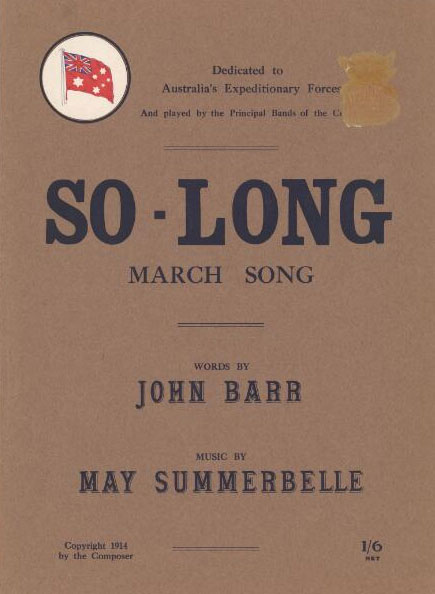
İşte bu marşın kompozitörü Gelibolu’da bulunup Avustralya’ya götürülen günlüğün varlığını geleceğe aktaran kişi.* Günlük Alıntılarının nerede olduğunu şimdi biliyoruz. Peki bu günlük nerede? Bilinmiyor. Kim vermiş? Hatırlamıyor. Bakalım May Summerbelle’in beş sayfalık yayınladığı çeviri alıntılar ve Günlük Alıntılarını bazı yorumlarla yayınlayan Avustralya kaynakları ne diyor? Avustralya arşiv belgelerine dayanarak hangi sonuçlara ulaşıyoruz?
* May Summerbelle’in Günlük Alıntıları’nın ikinci sayfasının sonundaki yorumu dikkate değerdir:
Bir Avustralyalı olarak, kendimi “düşman” ile aynı konuma koymak zor ve bu günlük kaydının amacı da bu. Bu kayıtlar, siperin diğer tarafındaki bir kişinin Müttefik güçlere olan bakışını anlamamız açısından önemlidir. Diğer tarafın gösterilmesiyle, bu askerler artık “Türk” ifadesiyle tanımlanan gölgeler değil, talihsiz ve kardeşin kardeşi katlettiği çatışmada paylaşılan müşterek insanlığa odaklanan aynı acıyı, korkuyu ve sorunları yaşayan canlı ve de nefes alan insanlardır. Var olma ihtimali olan herhangi bir düşmanlığın çoktan tarihin çöp sepetine atılmış olduğunu bilmek rahatlatıcıdır. Türk arşivleri, Türkler ve uluslararası bilim insanları için daha ulaşılabilir bir hale gelmiş olduğundan bu anlayış artacaktır ve hor görülen “Jacko”yu şeytanmış gibi gösteren şoven kitapların gücünü de azaltacaktır.
Ceride Kime Ait?
Ceride Binbaşı Ali Faik Bey’e Ait
Nasıl varıyoruz bu sonuca? Yukarıdaki Avustralya arşiv kayıtlarını inceleyerek:
- Kimsenin günlüğün 33. Alay 1. Tabur Komutanı’na ait olduğu hususunda bir şüphesi yok. Günlükten Alıntıların başında da ait olduğu kişi öyle yazılıyor.
- Hangi tabur komutanı?
Günlük 27 Nisan 1915 tarihinde başlıyor. Bu, Binbaşı Ali Faik Bey’in savaşa katıldığı gündür. Balkan Savaşı Günlüğü’nde olduğu gibi, Alay’a katılma emri almasıyla günlük tutmaya başlar. Günlük şehit olduğu tarih 30 Nisan 1915 tarihinde sona eriyor. Günlüğü tutan Binbaşı Ali Faik Bey’den başkası olsaydı tutmaya devam ederdi. - Günlük tuttuğu bugüne kadar ortaya çıkan başka bir 33. Alay 1. Tabur Komutanı olmamıştır.
- Günlüğün 2. Bölümünde de şu yazılı:
Sol Kanat Emri 29 Nisan 1915
1. Kaymakam Şevki Bey’in ölümü nedeniyle grubun kumandası
şimdi bana verildi.
Bu, 33. Alay Kumandanlığı vekâletinin Binbaşı Ali Faik Bey’e verildiği gündür.
(29 Nisan 1915, 8.15). *
* Kaynak: ÇANAKKALE MUHAREBELERİNDE 19’UNCU TÜMEN CERİDELERİ,
2. CİLT, Sayfa: 125. (Ayrıntılı bilgi bu sayfa sonunda verilmiştir.)
Sonuç olarak “Gelibolu Ceridesi” Binbaşı Ali Faik Bey’e aittir.
Bu kadarı bile heyecanımı sonsuza vardırıyor. Eğer bir gün büyükbabamın ceridesinin orijinali ortaya çıkarsa ne halde olurum bilemiyorum. 1915 Gelibolu’sundan 1931 Sydney’ine ve şimdi yıl 2020! Her an bekliyor olacağım.
Tüm bunları sitesinde yayınlayan kurum, “Australian Light Horse Studies Centre”, hiçbir müracaatıma cevap vermiyor. Resmi kanallardan yapılan müracaatlarla da ilgilenmedi. Bunca yıldan sonra, site yıllarca yayınlanıp izlendikçe, bulan biri varsa “Ceride”yi onlara getirmiş olmalı. “Ceride” nin ellerinde olması büyük bir olasılık yoksa kendilerine verdiğim bilgiler üzerine konuyu sitelerine yansıtmak için sabırsızlık gösterirlerdi.
Yeni Gelişme-17 Temmuz 2020:
Avustralya Savaş Anıtı Müzesi Araştırma Merkezi “Ceride” alıntılarını dijital ortama aktardı ve sitesi üzerinden genel erişime açtı.
The Australian War Memorial
www.awm.gov.au
AWM25 367/126 - [Written records, 1914-18 War:] [Gallipoli] Extract from a diary found on a dead Turkish Officer (Major Commanding 1st Battalion, 33rd Regiment) Gallipoli 30 November 1915. Article donated to AWM by Miss M. Summerbelle.
Not:
İngilizlerin, Çanakkale Savaşı sonrası, ele geçirdikleri askeri dokümanları Mısır’a götürdükleri, orada tümünü İngilizceye çevirttirip orijinallerini yaktıkları bilgisini edindim. Binbaşı Ali Faik Bey’in Ceridesinin tam olarak çevrildiği anlaşılıyor. Her nasılsa, Bayan May Summerbelle’in eline bu tüm çeviri geçmiş ki ondan alıntı yapıp yayınlıyor. Bu da ceridenin orijinalinin olmasa bile tüm çevirisinin Avustralya’da bulunduğu olasılığını güçlendiriyor.
Aşağıdaki bölüm doğrudan DESERT COLUMN (ÇÖL SÜTUNU) sitesinden alınmıştır.
AUSTRALIAN LIGHT HORSE STUDIES CENTRE (AVUSTRALYA HAFİF SÜVARİ ÇALIŞMALARI MERKEZİ)

Anzak Koyu Savaşı, Türk Subayı 33. Alay 1. Tabur Komutanı’nın ölümüne kadarki günlüğü, 30 Nisan 1915, Bölüm 1
Başlık: Tk - Bks - 1/33IR
Anzak Koyu Savaşı
Türk Subayı 33. Alay 1. Tabur Komutanı’nın ölümüne kadarki günlüğü, 30 Nisan 1915
Bölüm 1
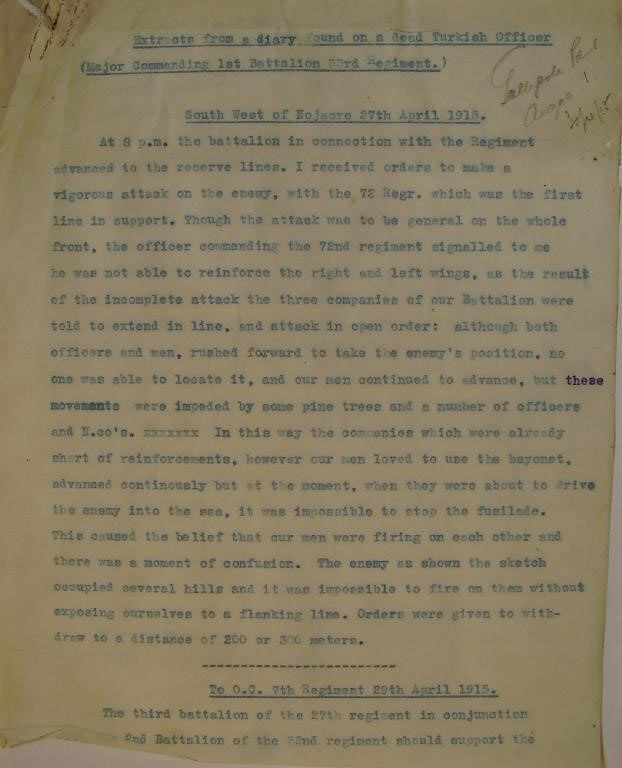
Ölü Türk Subayında bulunan Günlükten Alıntılar, 33. Piyade Alayı, 1. Tabur Komutanı Binbaşı, Gelibolu 30 Nisan 1915.
Ölü Türk Subayında bulunan Günlükten Alıntılar (33. Piyade Alayı, 1. Tabur Komutanı Binbaşı)"Nojacre"nin Güney Batısı 27 Nisan 1915Akşam saat sekizde Tabur Alay bağlantılı olarak ihtiyat hatlarına doğru ilerledi. İlk destek hattında olan 72. Alay ile düşman üzerine etkili bir saldırı gerçekleştirmem konusunda emir aldım. Bu saldırının tüm cepheyi kapsaması gerekiyordu ancak 72. Alay Komutanı, sağ ve sol kanatları destekleyemeyeceğini bana bildirdi, tamamlanmamış saldırı sonucunda, taburumuza bağlı üç bölüğe hatta kalarak açık bir düzende saldırmaları emredilmişti: hem subaylar hem de askerler düşman hattını ele geçirmek için ileriye doğru atıldılarsa da hiçbiri burayı ele geçiremedi, adamlarımız ilerlemeye devam etti fakat bu manevralar birkaç çam ağacı ile bazı subaylar ve komutanlar tarafından engellenmişti. Bu durumda, adamlarımızın süngü kullanmayı sevmelerine, o sırada sürekli ilerlemelerine ve düşmanı denize dökmek üzere olmalarına rağmen, takviyeden yoksun birliklerimizin düşmanın yaylım ateşini durdurması mümkün değildi. Bu, adamlarımızda, birbirleri üzerine ateş açtıkları inancını oluşturdu ve bir anlık karışıklık meydana geldi. Krokide de görüldüğü üzere, düşman birçok tepeyi ele geçirdi ve kendimizi göstermeden yan hatta üzerlerine ateş açmak mümkün değildi. 200 ila 300 metre mesafeye çekilmemiz emredildi.
Bu günlük Gelibolu’da savunmadaki Avustralyalı askerlerin eline geçti. Anzak istilasını püskürtmek için Türk kuvvetlerinin gayretleri hakkında fevkalade içyüzü vermektedir.
Anzak Koyu Savaşı, Türk Subayı 33. Alay 1. Tabur Komutanı’nın ölümüne kadarki günlüğü, 30 Nisan 1915, Bölüm 2
Başlık: Tk - Bks - 1/33IR
Anzak Koyu Savaşı
Türk Subayı 33. Alay 1. Tabur Komutanı’nın ölümüne kadarki günlüğü, 30 Nisan 1915
Bölüm 2
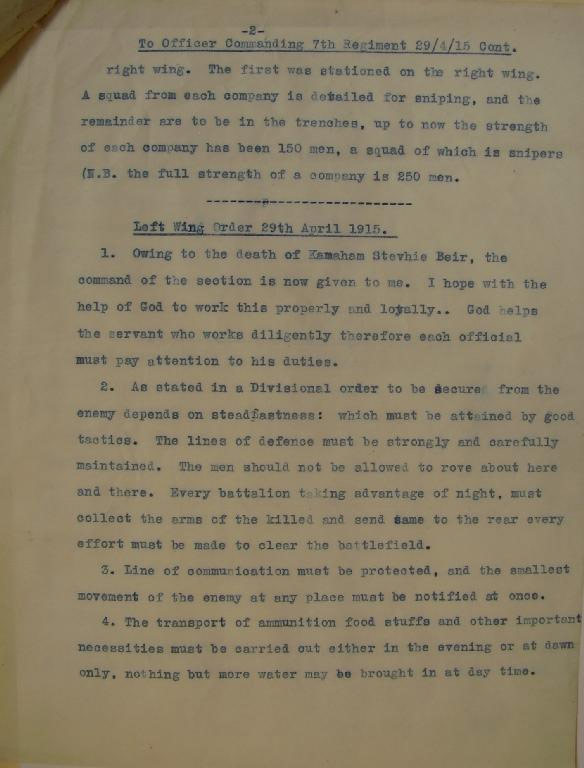
Ölü Türk Subayında bulunan Günlükten Alıntılar, 33. Piyade Alayı, 1. Tabur Komutanı Binbaşı, Gelibolu 30 Nisan 1915.
7. Alay Komutanlığı'na, 29 Nisan 191527. Alay'ın 3. Taburu 32. Alay'ın 2. Taburu ile bağlantılı olarak sağ kanadı desteklemelidir. İlkinin sağ kanatta olması kararlaştırılmıştır. Her bölükten bir manga pusu ateşine dâhil olacak ve geri kalanlar ise siperlerde kalacaktır. şu ana kadar her bölük 150 kişilik keskin nişancılardan oluşmaktadır.
Sol Kanat Emri 29 Nisan 1915
- Kaymakam şevki Bey'in ölümü ile birlikte grubun komutası bana verildi. Allah'ın izniyle bu işi düzgün bir şekilde sadakatle yapacağımı umuyorum. Allah, özenle ve sebat ederek çalışan kullarına yardım eder, bu yüzden her bir subay görevine sadık olmak zorundadır.
- Tümen emrinde de bahsedildiği üzere, düşman tehlikesine karşı güvende olmak azme bağlıdır ki, bu da iyi taktiklerle elde edilmelidir. Savunma hatları güçlü ve dikkatli bir şekilde korunmalıdır. Adamların etrafta gezinmelerine izin verilmemelidir. Gece karanlığından yararlanan her tabur, ölenlerin silahlarını almalı ve olduğu gibi geriye göndererek savaş alanının temizlenmesi için her gayreti göstermelidir.
- İletişim hattı korunmalı ve herhangi bir yerdeki en küçük düşman hareketi dahi derhal bildirilmelidir.
- Cephane, gıda ve diğer önemli gereksinimlerin ulaşımı yalnızca ya gece ya da şafakta gerçekleştirilmeli ve gündüzleri sudan başka hiçbir şey taşınmamalıdır.
Bir Avustralyalı olarak, kendimi “düşman” ile aynı konuma koymak zor ve bu günlük kaydının amacı da bu. Bu kayıtlar, siperin diğer tarafındaki bir kişinin Müttefik güçlere olan bakışını anlamamız açısından önemlidir. Diğer tarafın gösterilmesiyle, bu askerler artık “Türk” ifadesiyle tanımlanan gölgeler değil, talihsiz ve kardeşin kardeşi katlettiği çatışmada paylaşılan müşterek insanlığa odaklanan aynı acıyı, korkuyu ve sorunları yaşayan canlı ve de nefes alan insanlardır. Var olma ihtimali olan herhangi bir düşmanlığın çoktan tarihin çöp sepetine atılmış olduğunu bilmek rahatlatıcıdır. Türk arşivleri, Türkler ve uluslararası bilim insanları için daha ulaşılabilir bir hale gelmiş olduğundan bu anlayış artacaktır ve hor görülen “Jacko”yu şeytanmış gibi gösteren şoven kitapların gücünü de azaltacaktır.
Anzak Koyu Savaşı, 33. Alay 1. Tabur’un yerleşimini detaylandıran harita, 25 Nisan 1915 - Bölüm 2
Başlık: Tk - Bks - 1/33IR
Anzak Koyu Savaşı
Türk Subayı 33. Alay 1. Tabur Komutanı’nın ölümüne kadarki günlüğü, 30 Nisan 1915
33. Alay 1. Tabur’un yerleşimi, 25 Nisan 1915 - Bölüm 2
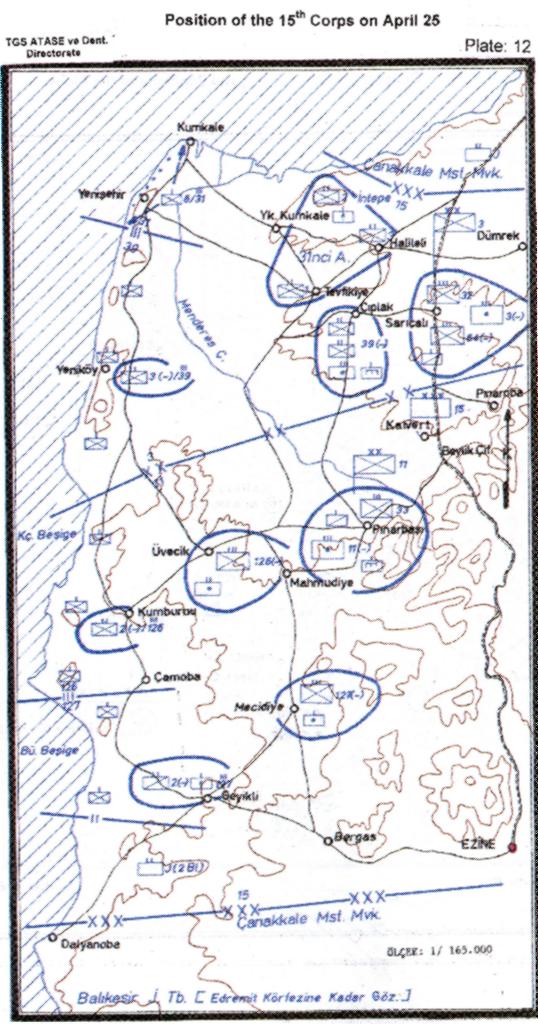
11. Tümen 33. Piyade Alayı 1. Tabur’un hareketinin izinden gitmek için, Anadolu’da Kumkale’nin tam güneyi başlangıç yeridir. Pınarbaşı adlı küçük kasaba 11. Piyade Tümeni’nin kumanda merkezi idi ve 1. Tabur Alay’ın diğer taburlarıyla kaldı. Burada, Pınarbaşı’nın Doğu Anadolu’da aynı isimli büyük bölgesel kasaba olmadığına dikkat edilmelidir. Yukarıdaki harita, 25 Nisan 1915’te Müttefiklerin şafak saldırısından sonra Kumkale civarındaki kuvvetlerin yerlerini vermektedir.
Anzak Koyu Savaşı, Türk Subayı 33. Alay 1. Tabur Komutanı’nın ölümüne kadarki günlüğü, 30 Nisan 1915, Bölüm 3
Başlık: Tk - Bks - 1/33IR
Anzak Koyu Savaşı
Türk Subayı 33. Alay 1. Tabur Komutanı’nın ölümüne kadarki günlüğü, 30 Nisan 1915
Bölüm 3
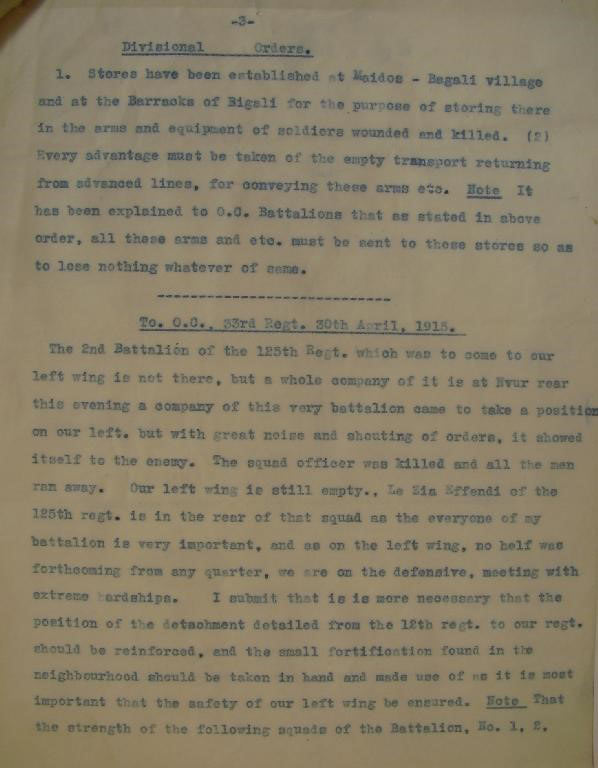
Ölü Türk Subayında bulunan Günlükten Alıntılar, 33. Piyade Alayı, 1. Tabur Komutanı Binbaşı, Gelibolu 30 Nisan 1915.
Tümen Emirleri
- Yaralı ve ölen askerlerin silah ve teçhizatlarını depolamak amacıyla Maydos - Bigalı Köyü ile Bigalı'daki kışlalarda depolar inşa edilmiştir.
- Bu silahları vs. ulaştırmak için, ileri mevzilerden dönen boş ulaşım araçlarından azami derecede yararlanılmalıdır.
Not: Yukarıdaki emirde de belirtildiği üzere, tabur komutanlıklarına, tüm bu silahların ve sairinin kaybolmaması için bu depolara gönderilmesi bildirilmiştir.
33. Alay Komutanlığı'na 30 Nisan 1915
Sol kanadımıza gelmesi gereken 125. Alay'ın 2. Tabur'u yerinde değildir fakat Birliğe ait tüm bir bölük, Nvur'un gerisinde bulunmaktadır. Bu akşam, bu Tabur'a ait bir bölük, solumuzda mevzilenmek için geldi fakat büyük bir gürültü çıkarmaları ve emirlerin bağırılarak verilmesi nedeniyle düşmana yerlerini belli ettiler. Manga Komutanı öldürüldü ve tüm adamlar kaçarak uzaklaştılar. Sol kanadımız hala boş. 125. Alay'dan Teğmen Ziya Efendi, bu manganın gerisinde bulunmaktadır ve taburumdaki her birey fazlasıyla önemlidir ve sol kanatta, hiçbir karargâhtan yardım gelmemesinden dolayı, zorluklar içinde savunma yapabiliyoruz. 12. Alay'dan alınarak kendi alayımıza verilen mevzinin güçlendirilmesi ve yakınlarda bulunan küçük tahkimatın ele geçirilerek sol kanadımızın güven altına alınması konusunda kullanılması gerektiğini arz ediyorum.
Anzak Koyu Savaşı, Türk Subayı 33. Alay 1. Tabur Komutanı’nın ölümüne kadarki günlüğü, 30 April 1915, Bölüm 4
Başlık: Tk - Bks - 1/33IR
Anzak Koyu Savaşı
Türk Subayı 33. Alay 1. Tabur Komutanı’nın ölümüne kadarki günlüğü, 30 Nisan 1915
Bölüm 4
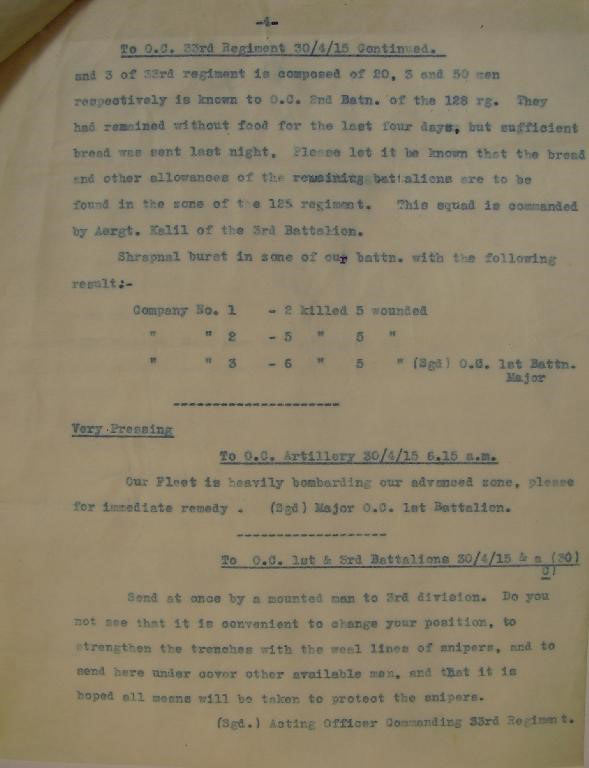
Ölü Türk Subayında bulunan Günlükten Alıntılar, 33. Piyade Alayı, 1. Tabur Komutanı Binbaşı, Gelibolu 30 Nisan 1915.
Not: 33. Alay Taburu'nun aşağıda gösterilen ve sırasıyla 20, 3 ve 50 adamdan oluşan 1, 2 ve 3 numaralı bölüklerin kuvveti,
128. Alay'ın 2. Tabur Komutanlığı'na bildirilmiştir. Son dört gündür yiyecekten yoksundular fakat dün gece yeterli miktarda ekmek gönderildi. Geriye kalan taburların ekmek ve diğer ihtiyaçlarının 125. Alay Bölgesi'nden tedarik edilebileceğini lütfen bildiriniz.
Bu mangaya, 3. Tabur'dan Halil çavuş komuta etmektedir.Taburumuza düşen şarapnelin patlamasıyla zayiat rakamları aşağıda görüldüğü üzeredir:
Çok İvediTopçu Birliği Komutanlığı'na, 30 Nisan 1915, 06.15
Bölük ölü Yaralı No.1 2 5 No.2 5 5 No.3 5 5 Donanmamız, ileri hattımızı şiddetli bir şekilde bombardımana tutuyor, lütfen gereğini ivedi bir şekilde yapınız.
(İmza) Binbaşı, 1. Tabur Komutanı
1. ve 3. Tabur Komutanlıkları'na ve Birlik Komutanı'na, 30 Nisan 1915
Atlı bir adamla derhal 3. Tümen'e gönderiniz. Mevziinizi değiştirmenizin, siperleri keskin nişancılarla kuvvetlendirmenizin ve diğer mevcut adamları sığınmaları için buraya göndermenizin gerekli olduğunu görmüyor musunuz ve keskin nişancıların korunması için tüm tedbirlerin alınacağını umalım.
(İmza) 33. Alay Komutan Vekili
Anzak birlikleri için bir şeyler iyi olmazken, yukarıdaki belge, savunma ve hücum düzenlemek için ellerinden geleni yapan Türkler için hatta daha kötü olduğuna işaret ediyor. Bu belge, açlıkla boğuşan ve düşman ateşi kadar harap eden dost ateşi problemleri olan birliklerden bahsediyor.
Anzak Koyu Savaşı, Türk Subayı 33. Alay 1. Tabur Komutanı’nın ölümüne kadarki günlüğü, 30 Nisan 1915, Bölüm 5
Başlık: Tk - Bks - 1/33IR
Anzak Koyu Savaşı
Türk Subayı 33. Alay 1. Tabur Komutanı’nın ölümüne kadarki günlüğü, 30 Nisan 1915
Bölüm 5
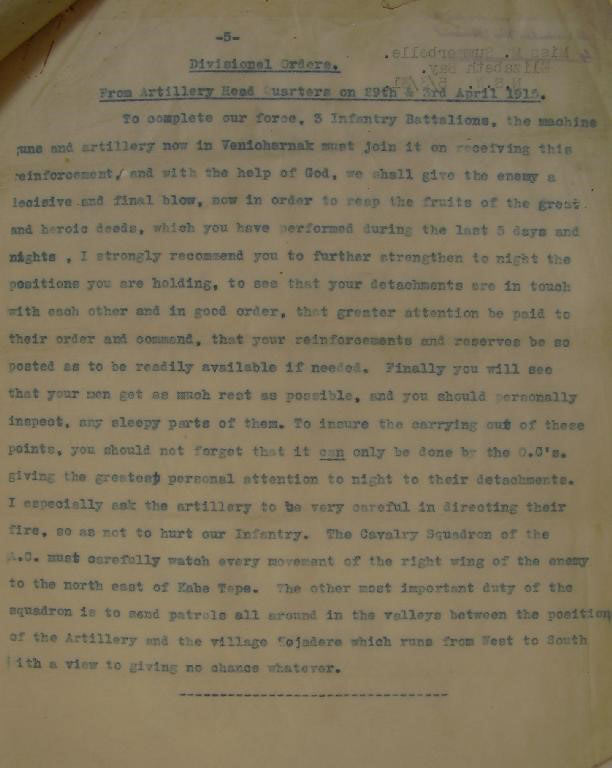
Ölü Türk Subayında bulunan Günlükten Alıntılar, 33. Piyade Alayı, 1. Tabur Komutanı Binbaşı, Gelibolu 30 Nisan 1915.
Tümen EmirleriTopçu Karargâhı'ndan, 29 ve 30 Nisan 1915Bu desteği almak amacıyla, birliğimizi tamamlamak için şu an Venichernak'da bulunan üç piyade taburu, makineli tüfekler ve topçular birleştirilmeli ve Tanrı'nın da yardımıyla düşman üzerine kararlı bir şekilde giderek son bir darbe indirilmelidir, son beş gün ve gece boyunca sergilemiş olduğunuz büyük kahramanlıkların meyvesini almak için eldeki hatları bu gece daha da kuvvetlendirmenizi, müfrezelerinizin birbirleriyle bağlantıda ve iyi bir düzen içinde olduklarını gözlemlemenizi, emir ve komutalarına daha özen gösterilmesini ve takviye ve yedek birliklerinizin gerektiğinde hazır olmalarını sağlamanızı önemle tavsiye ederim. Son olarak, adamlarınızı mümkün olduğunca yeterli derecede dinlendiriniz ve uyuduklarını şahsen denetleyiniz. Bu hususların uygulanmasını güvence altına almak için, bu gece bunun yalnızca Birlik Komutanı'nın müfrezelerine göstereceği büyük bir kişisel özenle yapılabileceğini unutmamanız gerekir. Kendi piyadelerimize zarar vermemek adına, özellikle topçu birliklerinden, ateş ettikleri yön konusunda dikkatli olmalarını rica ediyorum. Kolordu'nun Süvari Bölüğü, Kabatepe'nin kuzey doğu yönündeki düşmanın sağ kanadının her hareketini dikkatli bir şekilde izlemelidir. Bu Bölüğün diğer en önemli görevi, Topçu Birlikleri ve batıdan güneye doğru uzanan Kocadere Köyü arasında kalan vadilerin her noktasına devriye göndermektir.
Beş günlük sürekli savaş, bu subayın kumandası altındaki kişilerden bedel almış. Müttefikleri Gelibolu’dan atmak için son hareket kararlığıyla onlar dinlenmekle uyarılıyor. Savaş oldu, fakat Gelibolu Muharebeleri’ni her iki tarafta da tanımlayan tüm savaşlarda olduğu gibi, hücumlar hiçbir zaman yeterli birlik ve ağır silahlarla olmadı. Meseleleri çıkmaza sokarak, her zaman bir taraf emrindeki varlıkları güçlendirebildi, diğer taraf aynısını yaptı. Müttefikler en fazla savunmasız oldukları için, iletişim hatları daima yoğun baskı altında olduğundan, çarpışmayı kesen kuvvet idi. Türkler, kendi topraklarında çarpıştıkları için bu sorunlarla karşılaşmadılar.
Bu nottaki ilginç bir söylem, Kolordu Süvarisi ve onun rolü. Hafif Süvari’nin rolünü piyade indikten üç hafta sonra öngörmek.
33. Piyade Alayı’na kumanda eden subaylar
Başlık: Tk - Bks - 1/33IR
Anzak Koyu Savaşı
Türk Subayı 33. Alay 1. Tabur Komutanı’nın ölümüne kadarki günlüğü, 30 Nisan 1915
33. Piyade Alayı’na kumanda eden subaylar
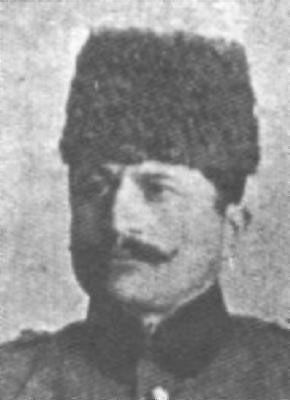
Yüzbaşı Sadık Efendi 1. Tabur 1. Bölük kumandanı idi. 17 Temmuz 1915 tarihinde çarpışmada öldürüldü.
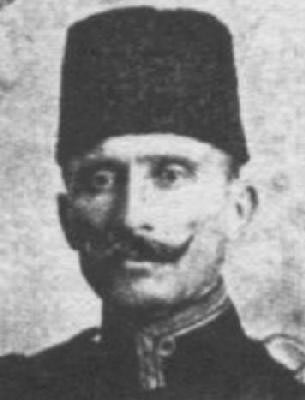
Yarbay Ahmet Şevki Bey 33. Piyade Alayı komutanı idi. 29 Nisan 1915 tarihinde çarpışmada öldürüldü. Resmi aşağıdadır.
Ahmet Şevki Bey çarpışmada öldürüldükten sonra, İkinci Tabur komutanı Yarbay Rüştü Bey 33. Alay komutanı atandı.
Binbaşı Besim Bey 3. Tabur kumandanı idi. 29 Nisan 1915 çarpışmasında yaralandı.
33. Alay 1. Tabur’dan isimsiz subayın günlüğü Alay’da dahil olan kişilerin belirlenmesinde sorun yaratıyor.
Binbaşı Ali Faik Bey 1. Tabur komutanı idi.
Unutmayalım
Teşekkür: Bilgi ve fotoğraflar Tosun Saral tarafından verilmiştir.
“DESERT COLUMN” sitesinde 33. Piyade Alayı’na komuta eden subaylar listesinin sonunda Tosun Saral kaynaklı notlar var. Alay Komutanı Yarbay Ahmet şevki Bey 29 Nisan 1915 tarihinde şehit olunca yerine 2. Tabur Komutanı Rüştü Bey’in atandığı belirtiliyor. Halbuki ordudaki hiyerarşi kurallarına göre görev
1. Tabur Komutanı’nındır. Yani Binbaşı Ali Faik Bey’in.
Günlüğün 2. Bölümünde de şu yazılı:Left Wing Order 29 April 1915
1.Owing to the death of Kamahan Stevhie Beir,
the command of the section is now given to me.(Sol Kanat Emri 29 Nisan 1915
1.Kaymakam şevki Bey’in ölümü nedeniyle
grubun kumandası şimdi bana verildi.)
Binbaşı Ali Faik Bey bir gün sonra, 30 Nisan 1915 tarihinde şehit oluyor. Bu bir günlük alay komutanlığının kayıtlara geçememe olasılığı vardır. Rüştü Bey’in O’ndan sonra komutan olmuş olması doğaldır.
Nitekim, 19. Tümen Ceridelerinde yer aldığı gibi, Binbaşı Ali Faik Bey’in 33. Alay Komutanlığı’na vekâlet emri gecikmeden verilmiştir.
(29 Nisan 1915, saat 8.15):
“Târihi: 16/2/1331
Sâat ve Dakika: 8,15 evvel
Vukuât:
On Dokuzuncu Fırka Kumandanlığına
3- Mıntıka Kumandanlığı tarafımdan îfâ ediliyor. 33. Âlâya mezkûr
Âlâyın Birinci Taburu Kumandanı Binbaşı Fâik Bey’in vekâleti bildirildi.
77. Alay Kumandanı
Binbaşı
Sâib”
(Kaynak: ÇANAKKALE MUHAREBELERİNDE 19’UNCU TüMEN CERİDELERİ, 2. CİLT, Sayfa: 125.)
Diğer taraftan, bu sitede, Rüştü Bey “yarbay” olarak belirtilmekte ancak 33. Alay Harp Yazılarında “binbaşı” olduğu yazılmaktadır.